


Quality that is (far) superior to market standards and exceptional weaving will bring you 5-star comfort at home.
Immerse yourself in Bonsoirs softness


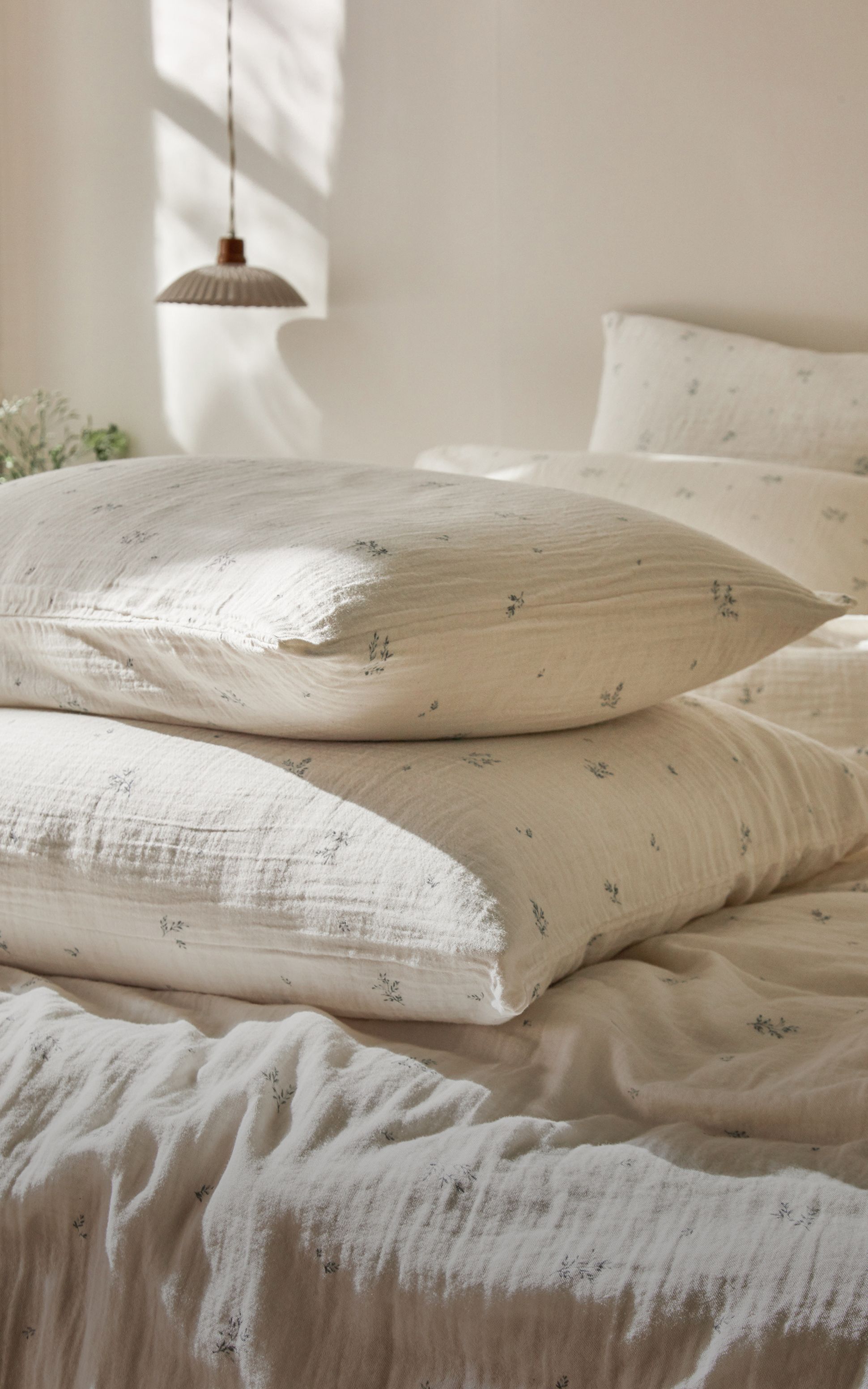


The flat sheet is placed between the sleeper and the blanket or duvet. It adds a light layer, limits direct contact with the duvet cover, and can make bedding care easier. In summer, it can also be used on its own when a duvet feels too warm.
The flat sheet is a large rectangle without elastic that is tucked around the mattress or laid over the sleeper. The fitted sheet has elasticized corners and deep pockets to fit the mattress. They can be used together: one under the sleeper, the other on top.
Choose a length that's enough to tuck in at the foot of the bed, and a width that allows for a comfortable drape on each side. The wider or thicker the mattress, the more generous the sheet should be. Refer to the model's size guide, and take into account the depth needed to tuck under the mattress.
Start by centering the flat sheet, then tuck the bottom under the mattress. For crisp corners, make hospital corners: lift the side of the sheet, tuck in the lower section, then fold over and tuck in the remaining panel. Avoid pulling the top too tight so there's still room for your feet.
Yes. Positioned between the body and the duvet, the flat sheet adds a flexible layer and protects the duvet cover, which can then be washed less often. It also lets you push the duvet aside during the night while still staying covered by a light fabric.
Cotton percale or washed percale are ideal for warm nights thanks to their cool feel. Washed linen can be used all year round and helps regulate temperature. Cotton sateen offers a softer, more enveloping feel, while cotton gauze provides a gentle, airy touch.