Our collection






)
)
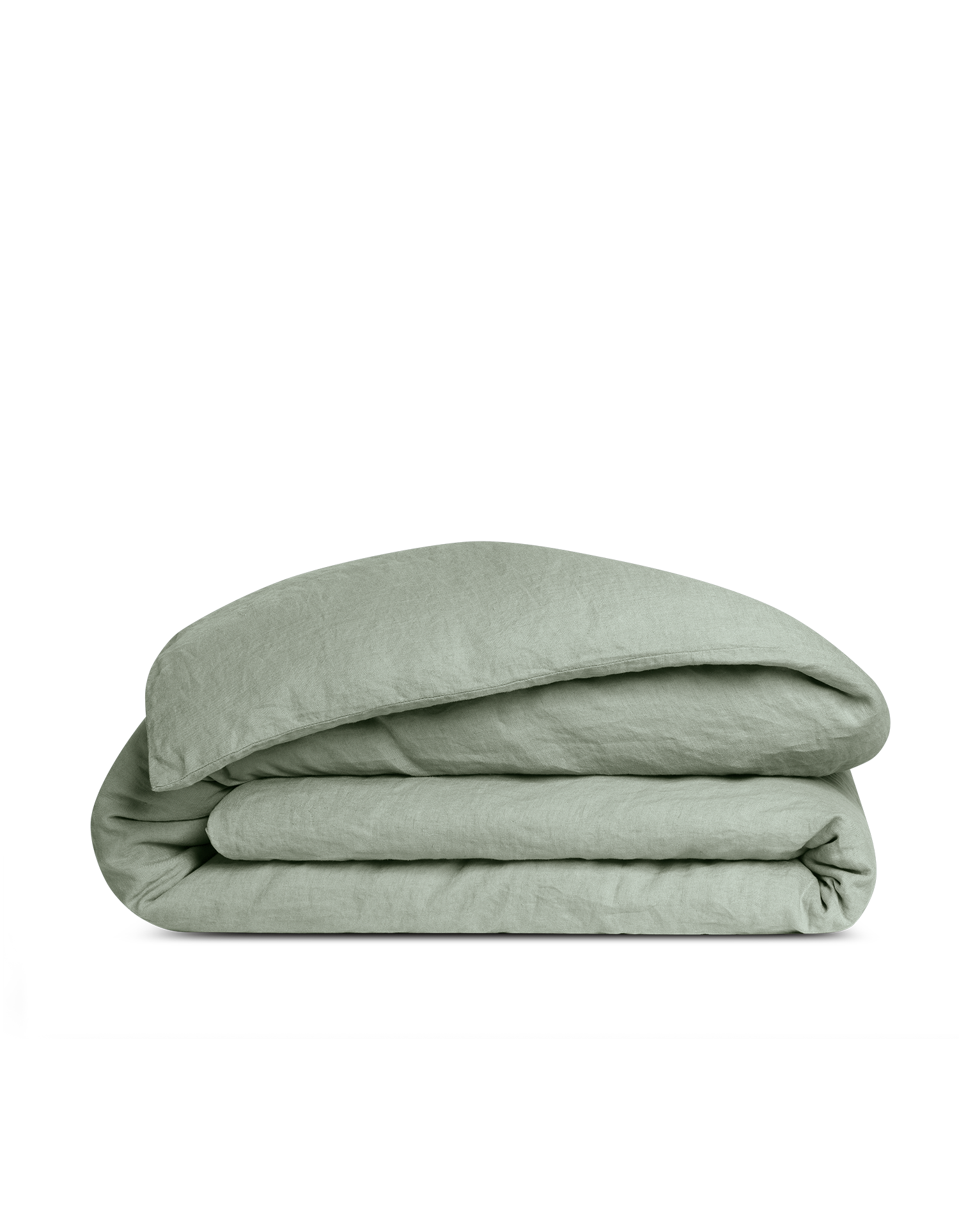
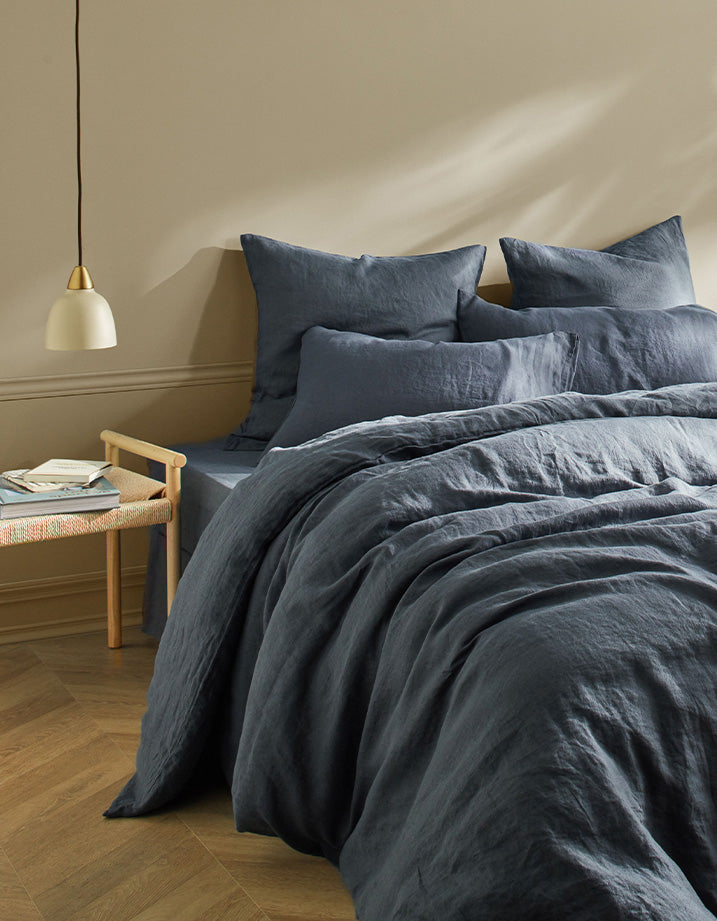
UNRIVALLED WASHED LINEN
Our 160gr/m² French washed linen sheets are crafted from exceptionally high-quality French linen and woven at our Portuguese workshop (soon to celebrate its centenary!) located just a few kilometres from Porto. An unparalleled weave delivers an unexpected softness for linen: this is the secret behind the unrivalled suppleness and incredibly soft feel of our Washed Linen. Its weave, airier than average, enhances its naturally temperature-regulating properties and lightness, for ultimate comfort in both summer and winter. Our washed linen in a nutshell:
)
)
SHEETS MADE IN PORTUGAL
We carefully selected an expert partner for this unique material. A Portuguese master craftsman, nearly a century old, who knows how to bring out unexpected softness and unmatched suppleness from linen. Their weave, airier than the market average, enhances its temperature-regulating qualities—light in summer, cozy in winter. In short, a maker of pure happiness.
)
)
A MARK OF EXCELLENCE
We pay particular attention to the quality and high standards of our creations, which is why the vast majority of our bed linen is OEKO-TEX® Standard 100 certified (CQ 1377/1, IFTH). This label of excellence certifies that every item covered by this label has undergone rigorous checks, guaranteeing that the certified articles contain no harmful substances in proportions that could pose a health risk. We thus offer you bed linen combining absolute comfort and compliance with the highest standards of textile safety.
Washed linen: the ideal fabric for bed linen
What is washed linen?
Washed linen differs from natural linen for several reasons. As its name indicates, to obtain this designation, the fabric must have undergone numerous washes at a very high temperature. It is then tumble-dried. For maximum results, the process, also called "linen decatizing", is performed multiple times and each time accompanied by softening agents.
The purpose here is to soften the fiber to remove the rough and coarse properties inherent in natural linen, which are not always suitable for the comfort of bed linen. Considerably softened, the fabric can then be used to make pillowcases, sheets, and towels.
Washed linen: a highly resistant fabric
At once ecological and trendy, washed linen is a noble material, ideal for bed linen. Although supple, this fabric remains extremely resistant to the wear of time. Its very tight weave gives it a very long, if not infinite, lifespan.
As such, many suspect washed linen of being almost indestructible. Also very easy to care for, linen sheets, for example, last a long time without fear of deterioration despite numerous machine washes. Finally, like fine wine, washed linen improves with age, and especially with repeated washes. Why and how to choose linen sheets? Although very resistant, washed linen is nonetheless a very trendy element to adorn a bedroom.
Thanks to their airy feel, linen sheets, for example, combine softness and well-being. This is why they are increasingly popular. Available in many colors and sizes, they offer a wide range of shades, ideal for frequently changing styles and offering your interior a new dose of softness every week.
Finally, while washed linen proves trendy and indispensable, it is also timeless! It adapts to all styles and all seasons. If linen sheets help maintain a certain freshness in summer, a linen duvet cover, on the other hand, is an excellent remedy against the low temperatures of winter.
How to care for linen sheets?
Unlike sheets made from natural linen, washed linen sheets undergo no change, even with a washing program at 60°C. An ideal washing program for deep cleaning sheets and removing the most stubborn stains.
However, to preserve the original shades of the fabric, it is recommended to wash the linen at 40°C and to separate dark and colored items during machine washes. For optimal cleaning, and to revive white, a dose of white vinegar can be added to the detergent.
Despite these tips, it is always important to follow the instructions on the fabric labels. If natural linen tolerates machine drying very poorly, washed linen, on the contrary, suffers no change. For greater efficiency, it is not advisable to overload the machine or to program cycles that are too long, under penalty of altering the quality of the fabric. Finally, and this is excellent news, washed linen sheets do not need to be ironed.
As soon as they are dry, they can be stored or simply put directly on the bed. Where are the Washed Linen sets made? At Bonsoirs, we are committed to selecting the best artisans, and our goal is to forge strong ties with each of our partner workshops.
For The Washed Linen, 100% of our sheets are made in a family business, with century-old expertise in household linen production, a few kilometers from Porto in Portugal. Where do the raw materials used in the production of Washed Linen sets come from? For the creation of our Washed Linen sheets, we have selected a premium linen.
Linen is a widely cultivated material in France, but this fiber does not tolerate high heat and lack of water. The crops are therefore mainly found along the coast, in the "great north" region of France. The linen used in our productions is therefore harvested in France, in the area extending from Normandy to Belgium.
)
)
)
)
)
)